209-577-1479
How to Find a Septic Tank on Your Property
Reading time 5 min
A buried service line or access point can often surprise a homeowner. Knowing the whereabouts of the septic system in relation to maintenance, landscaping, or even selling and renovations in the home could prove valuable since even simple pumping requires accuracy. If you are wondering how to find septic tank, understanding its location early can save a lot of time and effort.
Begin with Paperwork: The Blueprint for Success
First of all, tracking down any papers related to the property is a great place to start. The proper paperwork will lead a person to the tank, drain field, and method of installation. This step is essential if you want to learn how to find out where your septic tank is.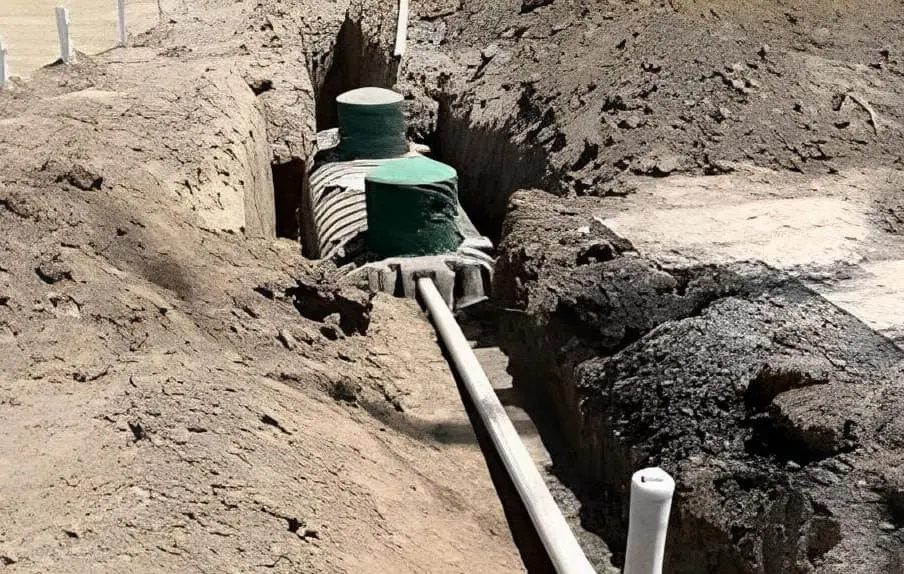
Search for These Records
- Property deeds and recorded site plans;
- As-built drawings from the original septic tank installation;
- Permits issued for the use of a septic system;
- Inspection and maintenance reports;
- Any contractor or builder with information about the system.
These documents will often feature simple schematics illustrating the position of the tank in relation to the house foundation, and specifications for size and date of installation. Once you have your hands on a permitting document or "as-built," you've probably uncovered the septic tank location on your property.
Where to Get Records
These documents are usually kept in county or city offices. Health or building departments or that of property records are some good places to start. Many places have started providing these services online, which is quite helpful if you are researching septic system location.
How to Find a Septic Tank on Your Property
If the paperwork is not available, a diligent search begins. The best thing about plumbing work is to follow the pipes out of the house. The landscape should be read carefully. Knowing how to find septic tank on property is crucial in this step.
Start from inside by locating the main sewer pipe exit. Most likely, it is marked by a 4-inch pipe running out from the basement or crawl space or the utility room through the foundation wall. Septic tanks usually located 10 to 25 feet from your house.
While outside, keep a watch for suspicious areas such as greener grass or shallow depressions. Raised manholes or vent pipes are other things to watch for. Manhole covers are especially useful if you need to retrieve a sewer line inspection camera that has been lost. If you ask yourself where is septic tank, these visual clues are key indicators.
Even so, there can be some verification of a suspected area through personal searching. Using a long metal rod and pole-and-probe searches through a systematic grid within the projected pipe path will indicate where there is a hard edge of a lid or a tank wall as opposed to ground. Remember to move slowly. This will avoid hours of fruitless digging.
Safety comes first. Before digging or probing, call utility marking services to trace gas, electricity, and water lines running underground. Do not ever enter a tank. Gas such as methane and hydrogen sulfide can be poisonous and deadly in a confined space.
High-Tech Ways to Locate Your Septic Tank
When it comes to checks and probing, technology comes to the rescue. Technicians have information regarding what is beneath the surface without digging, helping you determine septic tank location safely.
Sewer cameras or borescopes offer a viable solution. These are fed into an access hole and will follow the sewer line to the tank as it transmits a signal. Then a receiver above ground receives the signal and forms a path to the tank. You also get a view of pipe conditions along the way; obstructions and leaks are clear.
Ground Penetrating Radar (GPR) provides a wider perspective. GPR transfers radio waves beneath the earth's surface. The return echoes are used to create a map of the underground. A concrete tank, a plastic tank, a metal tank—together with the drainage pattern of the septic drain field—can all be traced using GPR. The non-invasive technique of GPR leaves your grass undisturbed.
These technologies work well in combination with each other, such as a camera for viewing the inside of the pipe as well as a locator for staging the tank below. Experienced operators read the readings to produce a precise location—a location that is not a guess. This is the easiest way to learn how to find out where your septic tank is without unnecessary digging.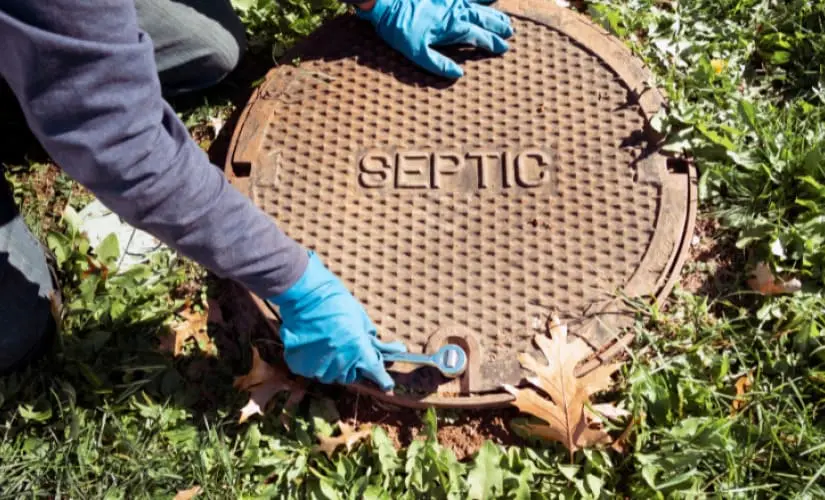
A1 Septic: Your Source for Locating, Inspecting, and Pumping
We have real-world experience to bring to each project. Our team uses their knowledge and advanced equipment to locate systems successfully. Fast? Sometimes. Thorough? Always. "Our service strategy finds the right mix of speed and attention to detail. We first analyze documents and walk around the property. Then we scope out the line from the foundation to the area of the problem using probe if necessary. And if the need arises, we find other ways to assess the situation without having to dig using sewer cameras or GPR." Beyond just a checklist, an inspection is so much more. We assess a septic system in terms of its capacity, lids, risers, liquid levels, baffles, as well as the levels of sludge and scum. We also check the drain field to determine possible saturation, presence of surcharge, and ensure adherence to regulatory standards. Regular professional inspection of a septic system increases its longevity. The usual period of pumping for most households is three to five years, but consumption patterns, family size, and storage capacity vary. For instance, in a family of four, it is advisable to pump water after two to three years. A regular 1,000-gallon storage tank is usually 8 to 9 feet long, 4 to 5 feet wide, and 4 to 5 feet high. However, this varies according to its materials. We uphold stringent safety measures during all our visits. From calling the utilities locator to ensuring the area is secured and doing the right ventilation when needed, safety measures work to protect both you and us. Even the issues that appear during the inspection stage will be highlighted, with viable choices on whether to mend, replace, or perform maintenance. Looking for a guaranteed locate and a complete inspection without the hassles? Contact us for service and enjoy a correct, safe, and effective solution for your septic system location and maintenance.